


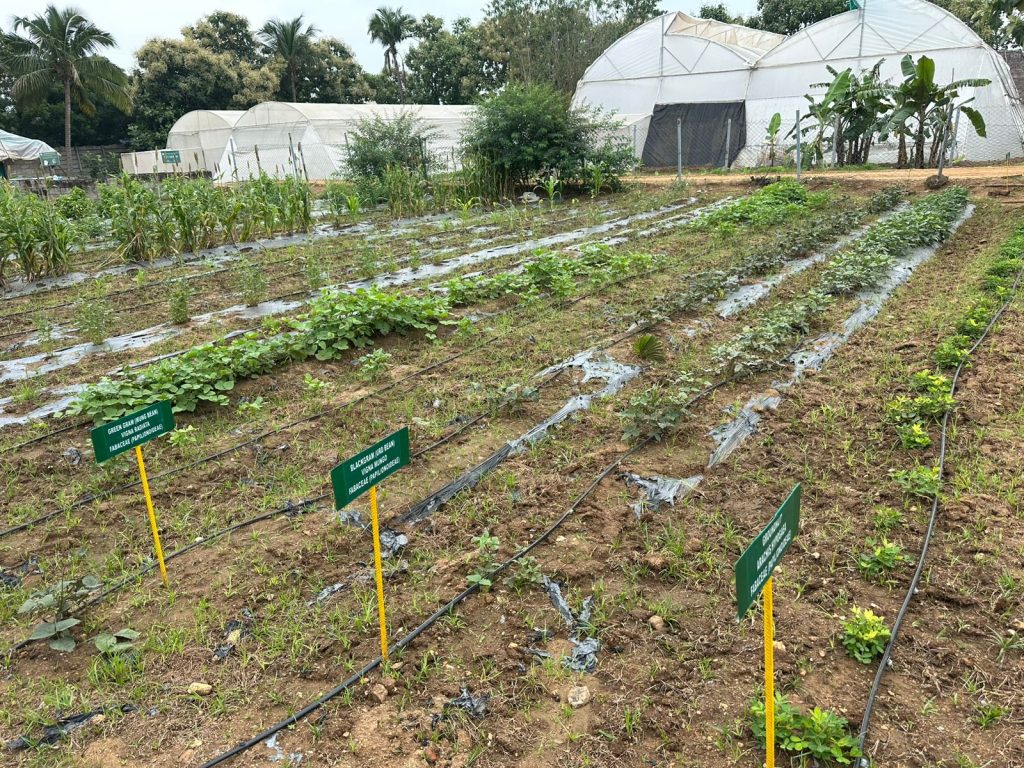
The Herbal Museum features a thoughtfully designed walkway around the herbal garden, laid with sand on one side, small stones on another, grass on the third side, and bare ground on the fourth side. This sensory pathway encourages barefoot walking, strengthening the connection between humans and soil while offering natural therapeutic benefits.
The herbal garden supports academic activities, helping students identify and learn about diverse medicinal plant species. It is also open to the public from 6:00 am to 8:00 pm, with facilities
available for pranayama. Traditional and modern medicine emphasize the combined benefits of walking and pranayama, and this garden aligns with University guidelines while promoting community well-being.
Herbs such as Noni, Mudakkathan, Nilavembu, Thulasi, and Lemongrass are cultivated for their benefits, especially for diabetic and hypertensive patients.
Learning & Community Benefits
The herbs in the garden help visitors understand the medicinal value of natural products used in teas, tinctures, and other preparations. For example:
Noni extract, prepared after fermentation, is useful in managing diabetes.
Lemongrass tea, made by aqueous extraction, provides a soothing effect on the throat.
Future initiatives will include guidelines for preparing home remedies using these herbs.
Rules and Regulations
| Name of the Drug | Biological Source & Family | Medicinal Uses |
|---|---|---|
| Asparagus | Asparagus racemosus – Asparagaceae | Urinary tract infection, rheumatism, uterine tonic, galactogogue, hyperacidity |
| Kunrimani | Abrus precatorius (Wild Liquorice) – Fabaceae | Dental caries, baldness, dandruff, scalp diseases |
| Adathoda | Adathoda vasica – Acanthaceae | Bronchodilator, antihistaminic |
| Nilavembu | Andrographis paniculata – Acanthaceae | Antispasmodic, febrifuge, hepatotonic, stomachic |
| Mullatha | Annona muricata – Annonaceae | Anticancer property |
| Neem | Azadirachta indica (Margosa) – Meliaceae | Anthelmintic, antifungal, antidiabetic, antibacterial, antiviral, skin diseases |
| Aloe vera | Aloe vera – Liliaceae | Moisturizing, wound healing, laxative |
| Brahmi | Bacopa monnieri – Plantaginaceae | Memory improvement, IBS, Alzheimer’s disease |
| Insulin Plant | Chamaecostus cuspidatus – Costaceae | Diabetes management |
| Mudakkathan | Cardiospermum halicacabum – Sapindaceae | Arthritis |
| Lemongrass | Cymbopogon citratus – Poaceae | Preservative, antifungal, insect repellent, cough relief |
| Noni | Morinda citrifolia – Rubiaceae | Diabetes, hypertension, arthritis, infections |
| Thulasi | Ocimum sanctum – Lamiaceae | Immunity booster, cold, cough, acne, memory improvement |
| Vetrilai | Piper betle – Piperaceae | Antiseptic, breath freshener |
| Black Pepper | Piper nigrum – Piperaceae | Digestive aid, antiparasitic, throat inflammation |
| Karpooravalli | Plectranthus amboinicus – Lamiaceae | Cough, sore throat, nasal congestion |
| Jamun | Syzygium cumini – Myrtaceae | Antidiabetic, anticancer |
| Nochi | Vitex negundo – Verbenaceae | Anti-inflammatory, vermifuge, natural repellent |
Healing Garden Concept
Green spaces in hospitals provide a refuge that promotes healing for patients, families, and staff—commonly known as healing gardens.
According to Clare Cooper Marcus and Marni Barnes, healing gardens promote:
Relief from symptoms
Stress reduction
Improved sense of well-being and hopefulness
With this vision, the PSG College of Pharmacy has developed a herbal garden within the PSG Health Campus to serve a diverse population. It is our hope that barefoot walking in this garden will offer benefits through rich aromas, acupuncture effects, and natural therapy.